What Is a Round Sling? Essential Guide to Types, Applications, and Benefits in Modern Lifting
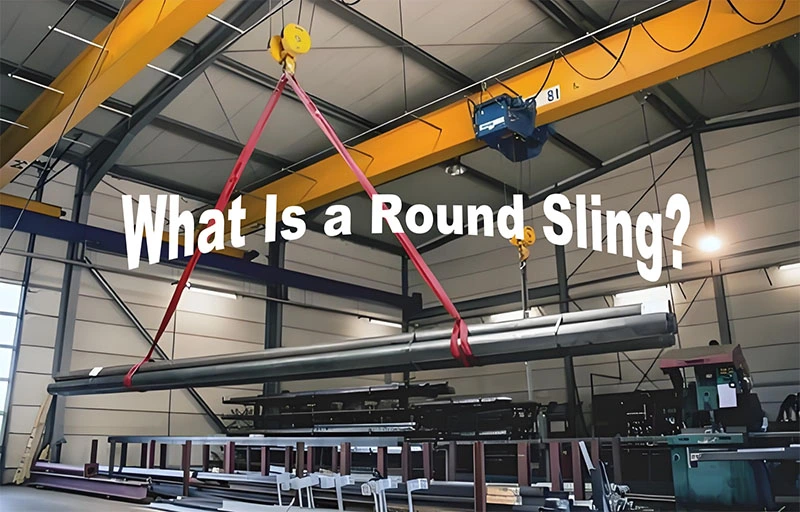
In modern lifting and rigging operations, safety and efficiency are non‑negotiable. But what is a round sling, and why has it become a preferred tool in industries ranging from construction to manufacturing? Essentially, a round sling is a durable, flexible, and lightweight synthetic lifting loop designed to handle heavy loads without damaging surfaces. Its versatility and protective design make it ideal for hoisting everything from steel beams to delicate machinery. In this article, we’ll explore the types of round slings, their common applications, advantages, and storage tips, helping you choose the right sling for any lifting task.
Table of Contents
- What Exactly Is a Round Sling?
- Types of Round Slings
- Common Applications: What Is a Round Sling Used For?
- What Is the Advantage of Round Slings?
- Storing Your Round Slings Properly
- Conclusion
What Exactly Is a Round Sling?
At its core, a round sling is an endless loop of synthetic yarn encased in a protective tubular jacket. The inner core provides the strength, while the outer cover shields against abrasion, UV rays, and chemicals. Round slings often color‑coded by capacity (Working Load Limit/WLL) to help riggers quickly match the right sling to the task at hand.
Engineered for vertical, choker, or basket hitches. Unlike traditional slings, round slings distribute weight evenly, minimizing pressure points on delicate loads. This design innovation stems from the need for safer, more versatile rigging solutions in high-stakes environments.
Types of Round Slings
Understanding the types of round slings helps you select the right tool for different lifting demands. Broadly, you can categorize them by configuration, material, and application:
By Configuration
- Endless Round Slings: Seamless, single‑loop slings that let operators adjust where the load bears on the sling for greater durability and flexibility. These are ideal when the load shape varies or when frequent repositioning is required.
- Eye & Eye Round Slings: Constructed with looped ends (“eyes”) for attachment to hooks and hardware — great for fixed‑end lifting setups.
Classification By Material
- Polyester Round Slings: The most common option, combining durability with resistance to moisture and fading.
- Nylon Round Slings: Offer additional elasticity, useful where shock loads may occur.
- HMPE / UHMWPE Round Slings (e.g., Dyneema®): High‑modulus polyethylene slings provide exceptional strength‑to‑weight ratios, making them ideal for heavy industrial lifting where human handling is frequent.
By Configuration of Legs
- Single‑Leg: Simple and lightweight
- Multi‑Leg (Double, Triple, Four‑Leg): Allow more stable, balanced lifting of asymmetrical or multi‑point loads
Together these variants empower professionals to handle diverse load types while maintaining safety and efficiency.
Common Applications: What Is a Round Sling Used For?
The question “what is a round sling used for?” has a broad answer: these slings are indispensable wherever heavy lifting or load positioning is required. Typical applications include:

- Lifting steel beams, machinery parts, and construction materials
- Hoisting manufacturing equipment in factories and warehouses
- Marine and timber industries for large structural components
- Transport and freight operations where loads must be lifted without damage
Because synthetic round slings are flexible and low‑abrasion, they shine when handling delicate or finished surfaces — a benefit not afforded by metal chain or wire rope slings.
What Is the Advantage of Round Slings?
Flexible Load Handling
Due to their loop shape and fiber core, they conform to varied load shapes, reducing pressure points and minimizing the risk of surface damage.
Lightweight & Easy to Manage
Unlike chain or wire rope slings, round slings are light and easy to carry, saving labor and time on large job sites.
Broad Load Distribution
The continuous loop evenly spreads load stress across the sling body, improving safety and reducing wear.
Higher Strength‑to‑Weight Ratio (Especially with HMPE)
High‑performance materials like UHMWPE provide exceptional tensile strength with minimal weight, ideal for repetitive heavy lifting.
Reduced Risk of Abrasion and Damage
The protective jacket decreases fiber wear, extending service life and lowering replacement costs.
Storing Your Round Slings Properly
Proper sling storage is often overlooked but critical for longevity and safety. Keep round slings:
- In cool, dry, shaded areas away from direct sunlight
- Off the floor to avoid contact with chemicals or abrasion
- Within reach but protected from sharp or heavy objects
Regular inspections before use are essential — damaged fibers, cuts, or frayed jackets can dramatically reduce load capacity.
Conclusion
In industrial rigging and lifting, knowing what a round sling is and how to use it safely can dramatically improve workplace efficiency and reduce risk. From lightweight endless polyester round slings to high‑performance HMPE options, the right sling enhances load control and safety.
👉 Ready to optimize your lifting operations? Explore our range of high‑quality round slings and contact our rigging experts today to match the ideal sling type to your specific application.


Comments
Post a Comment
Stay in touch with us and get the latest updates from the lifting and material handling industry